Spiritual Descendants of Adoniram Judson Buy the Missionary's Birthplace in Massachusetts
More than two centuries after Adoniram Judson first set foot in Burma, the people his life touched have come full circle. A group of Burmese Christians in America has purchased the 1725 colonial house in Malden, Massachusetts, where Judson was born and lived the first four and a half years of his life.
For years, Burmese Christians who gathered in the Boston area would drive up to the house, take a picture in the yard, and leave. They could do little more: the building had been sold to private owners in 1979, closing the property to visitors. Arthur Zawwynn Chen, a Chinese Burmese pastor from Yangon who has lived near the house for three decades, said Burmese believers longed to own it so they could tell their faith story in it. As Chen put it, Judson is the spiritual father who brought Christianity and salvation to Burma.
When Burmese churches held a conference in the area in 2023, Maung Maung Htwe, pastor of the Overseas Burmese Christian Fellowship, called for an offering to raise money for the house. They raised about $3,000. The house was not on the market then, but Chen now sees that moment as preparation by the Holy Spirit. In July 2024, Chen drove past and saw a sign saying the house would soon be for sale. He quickly called fellow leaders, word spread to Burmese-diaspora churches across the country, and the group that formed became the Adoniram Judson Heritage Foundation.
Churches donated, and three individuals provided private loans to help cover the down payment on the $875,000 house. By September of last year, more than 230 years after Judson's birth, Burmese Christians owned the building. “Every time we thought about our salvation and our faith, Judson comes in after Jesus,” Maung said.
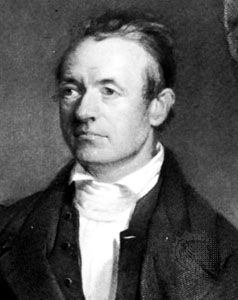
Judson was born on August 9, 1788, the son of a Congregationalist pastor. He was a skeptic as a student at what is now Brown University, but the death of a close friend drove him to seminary in search of truth. Converted at Andover Seminary, he felt called to missions and in 1812 became one of the first formally commissioned American missionaries, sailing with his wife Ann for Asia. En route, the couple became convinced of Baptist doctrine and resigned from the Congregationalist mission that had sent them.
They arrived in Burma in 1813. It took six years of language study before Judson baptized his first Burmese convert. In 1824, the First Anglo-Burmese War broke out and the Burmese government, suspecting him of being a spy, imprisoned him for 17 months. After his release, Ann died suddenly, followed by their toddler Maria. Judson finished a full Burmese Bible translation in 1834 and spent his remaining years compiling a Burmese-English dictionary. He died on a sea voyage in 1850 and was buried at sea.
The fruit of that long suffering is still growing. Today, about 85 percent of ethnic Chin and 90 percent of ethnic Kachin in Myanmar are Christians, and Baptists are the country's largest Protestant denomination. Burmese churches still celebrate “Judson Sunday” around July 13, the date he first arrived in Yangon.
The foundation has restored the house and opened it as a museum. The renovated first floor hosts conferences and houses Burmese theology students, while the second floor displays exhibits on the life and work of Judson and his three wives, including a Burmese Bible. Since its grand opening on August 9, 2025, churches, missionaries, and college fellowships have come to visit — some finding it on Google Maps, others hearing about it from friends. Chen is also working to bring back artifacts from Judson's ministry that were sent to the American Baptist Historical Society when the house left Baptist hands.
The work reaches beyond remembrance. The foundation raised money for recovery after Myanmar's 7.7 magnitude earthquake in May 2025, and it encourages Burmese believers enduring the civil war that began with the 2021 military coup. “God sees us,” Maung tells them, “he sent his disciple Adoniram Judson to save us” — and, he says, God notices their country still.
Read the original at Christianity Today.